There’s a moment that happens on almost every website.
Someone lands on your homepage, scrolls for a few seconds, and decides—without even realizing it—whether they trust you.
You can have the cleverest tagline, the perfect headline, and an About page that hits every talking point. But if something feels off, none of that matters. The visitor’s gut has already made the call.
That’s the part most marketers forget: people don’t read websites like they’re grading essays. They feel them. And that feeling happens before they’ve read a single word.
The Unspoken Judgment
You’ve probably done it yourself.
You land on a site that looks fine at first glance—but something’s not right. Maybe the logo feels stretched, or the colors fight each other. Maybe the text feels too shouty, or too cute for what the company actually does. You can’t pinpoint it, but you know you’re not clicking “Contact.”
That’s the gut talking.
It’s not about logic. It’s about instinct. We humans have been reading tone and body language long before words ever existed. Today, a website is your digital body language—and visitors are experts at picking up on whether it feels honest, confident, or just trying too hard.
When Clever Backfires
Clever copy can be fun. It can give your brand personality, make you memorable, even earn a smile.
But when cleverness becomes the main event, it’s usually covering something up.
Think of it like a nervous salesperson who talks too much. Every pun, rhyme, or inside joke starts to feel like a smokescreen. You begin to wonder, What are they hiding?
In web design, that same thing happens when:
- The headline is cute but unclear (“We make pixels pop!”… okay, but what do you actually do?)
- The copy sounds confident but the visuals look outdated
- The design screams luxury but the logo feels homemade
- The tone doesn’t match the service (“Trusted legal advice” shouldn’t sound like a smoothie ad)
When the words and the design aren’t in sync, the visitor feels the disconnect—even if they can’t articulate it. That unease is what kills conversions. Not slow loading, not SEO, not even price. Just a bad gut feeling.
Why “Feel” Beats Facts
Marketers love data. They’ll measure clicks, scroll depth, time on site, exit rate—everything they can get their hands on.
But what they’re really trying to measure is something unmeasurable: trust.
The truth is, trust doesn’t live in analytics. It lives in how a site makes someone feel.
Here’s what “feel” looks like online:
- Confidence. Clear structure. Easy navigation. Everything works as expected.
- Clarity. You know what the company does and who they do it for—within seconds.
- Consistency. Every color, photo, and line of text belongs together.
- Care. Attention to detail that says, “We take our work seriously.”
- Warmth. Real people behind the business. Not a corporate mask.
You can’t fake those things with clever copy. They’re baked into the design, the photography, the layout, the tone, and the hundreds of small choices that make a site feel right.
The Gut Test
When we build websites at Graticle, we often talk about the “gut test.”
It’s the moment when we load a design, take a step back, and just feel it. Before zooming in on details or wordsmithing, we ask:
- Does it feel trustworthy?
- Would you hand your credit card to this business?
- Would you want to work here?
- Does it match what the company is actually like?
If we have to think too long about any of those, it’s not ready.
That’s not some mystical creative process—it’s years of watching how real people react. Whether it’s a contractor in Kelso, a café in Vancouver, or a manufacturer in Aberdeen, the pattern is the same: people sense truth faster than they can read it.
The Copy Comes After the Feel
One of the biggest mistakes we see is writing first and designing later.
A business will hire a copywriter to create all their text before they even know what their website will look like. The result? Words that don’t fit the mood, pacing, or layout. It’s like writing dialogue before you’ve cast the actors.
At Graticle, we flip that.
We start with structure and emotion—the visual hierarchy, the rhythm, the atmosphere. Once that foundation feels right, then the copywriting can enhance it. The best copy doesn’t introduce new energy; it amplifies what’s already there.
Think of your website as a song. Design is the melody. Copy is the lyrics.
If the melody is sad but the lyrics are chipper, it’s jarring. If the melody feels powerful and the lyrics match that strength, it resonates.
The Dangers of Disconnect
Let’s say you run an industrial supply company. You’ve been around for decades, your customers trust you, and you pride yourself on expertise. But your website opens with a trendy headline like “Powering Progress Since Forever.” It sounds catchy—but does it reflect your actual story?
Or maybe you’re a small-town law firm. You want to sound approachable, so your homepage headline says “We’ve Got Your Back.” But your potential clients are dealing with serious estate or family matters. They’re not looking for a buddy—they’re looking for someone steady and professional.
That’s the gap between clever and credible.
And once that gap shows up, your audience’s gut fills it in with doubt.
They start wondering:
Is this business for people like me? Are they as experienced as they say? Do they take this seriously?
Even one small mismatch—a goofy tagline, a stock photo that feels staged, a font that doesn’t suit the tone—can start the unraveling.
The Power of Alignment
When design, copy, and truth align, everything clicks.
People don’t just read the words; they feel the brand.
That’s when a visitor starts to lean in. They stop skimming. They slow down. They imagine themselves working with you. That’s the kind of connection cleverness can’t buy.
We’ve seen it happen countless times.
A local business updates their site—not with flashy gimmicks, but with honest design and grounded messaging—and suddenly customers are saying, “I finally get what you do.” Sales increase not because of tricks, but because the story finally feels right.
That’s alignment. It’s not the loudest voice that wins; it’s the truest one.
The Truth Beneath the Words
Here’s the secret most “conversion experts” miss:
People don’t want to be persuaded—they want to be reassured.
They want to believe their decision is safe. That the company understands their world. That this isn’t just another slick pitch.
Good copy doesn’t sell a product. It reminds people they’re in the right place.
And the only way to write that kind of copy is to know who you really are as a business.
If your brand doesn’t have clarity, the writing will show it. The tone will wobble between confident and defensive. The headlines will overpromise. The testimonials will sound forced. The gut feeling? Uneasy.
But when your identity is solid, your copy doesn’t need to overcompensate. It can be simple, genuine, and strong. A single line can do the work of a paragraph.
Because truth reads faster than cleverness.
Examples
Let’s imagine a few situations where “clever” gets in the way of connection.
Example 1: The Contractor Site
Picture a remodeling company that fills its website with construction puns—“nailing it,” “building dreams,” and other wordplay. It’s fun, but when someone’s planning a $50,000 kitchen remodel, they’re not looking for jokes. They’re looking for reliability. If that same website used confident, straightforward copy, clean project photos, and a calm tone, it would feel much more trustworthy.
Example 2: The Local Café
Now imagine a cozy café that writes its website like a trendy food truck: “Slingin’ beans since 2014.” It’s playful, but it doesn’t match the warm, sit-and-stay-awhile atmosphere they actually offer. A better approach might highlight the handcrafted drinks, friendly staff, and local feel—still approachable, but honest to who they are.
Example 3: The Manufacturer
Or think of a manufacturing company using buzzwords like “innovative solutions” and “synergistic partnerships.” It sounds professional on paper, but visitors leave not knowing what the business actually does. Rewriting that site with plain language—what they sell, who they serve, and how they help—would instantly build credibility and interest.
These examples aren’t from any specific company, but they reflect real patterns we see all the time. When businesses stop trying to sound impressive and start sounding authentic, customers notice. And trust follows.
Why Honesty Wins Online
The internet is full of noise. Every scroll brings another ad, another brand, another claim. People have become professional skeptics.
So what cuts through?
Honesty. Quiet confidence. Consistency.
That doesn’t mean being boring. It means being real.
If your brand has personality, show it—but in a way that fits your industry and audience.
If you’re funny in person, be naturally funny online.
If you’re serious and detail-oriented, let that precision show through your design.
But never use cleverness to fill the gaps where truth should be.
The Role of Design in Trust
Design doesn’t just decorate copy—it frames it.
Every font, photo, and white-space decision sends a message.
- Too much clutter: Feels desperate.
- Too little structure: Feels careless.
- Too many fonts or colors: Feels unprofessional.
- Old design on a “new” brand: Feels dishonest.
A well-designed site says, “We care about details.” And when people see that, they assume you care about them, too.
That’s why we always tell clients: the best design doesn’t just look good—it feels right. It’s when your visual language, brand voice, and business personality all line up that trust becomes automatic.
Copy as Conversation, Not Performance
Great website copy doesn’t perform. It talks.
It sounds like a real person explaining something they care about. Not a script, not a slogan. Just a conversation.
At Graticle, we often help clients rework their content by asking:
“How would you say this out loud to a customer standing in front of you?”
When they answer, we write that.
Because people connect to people, not to polished lines. The more natural your copy feels, the more it builds comfort—and comfort builds conversions.
The Illusion of Perfection
One reason companies lean into cleverness is fear.
They’re afraid of sounding ordinary. They want to stand out, to look bigger, to prove they belong.
But trying too hard is the quickest way to lose authenticity.
Your audience doesn’t need you to be perfect—they need you to be believable.
They want to know you’ve done this before, you’ll do it right again, and you’ll pick up the phone when they call.
That’s it. That’s the bar. And it’s surprisingly low because so few brands meet it.
Perfection is intimidating. Honesty is reassuring.
The Real Meaning of “Brand Voice”
Brand voice isn’t about how clever you sound—it’s about how consistent you are.
If your emails, social posts, and website all sound like the same person, people start to trust that voice. They know what to expect. They feel like they’re talking to someone real.
That’s what keeps them around long enough to read your clever headline and believe it.
But if your voice keeps changing—formal one day, funny the next—it creates friction. That’s when visitors stop trusting their gut and start leaving your site.
The Bottom Line
Clever copy can spark interest. It can make people pause, smile, or remember you.
But it can’t replace trust.
It can’t cover an inconsistent brand.
And it can’t convince someone to ignore what their gut already knows.
People sense truth. They can feel alignment—or the lack of it—instantly.
That’s why the most effective websites don’t chase trends; they focus on cohesion, clarity, and care.
When everything lines up—design, copy, and truth—you don’t need clever tricks.
You just need to show up honestly.
So, What’s Next?
If your website feels “off” and you can’t explain why, it’s probably not your words—it’s the connection between them.
That’s the kind of problem we solve every day at Graticle Design.
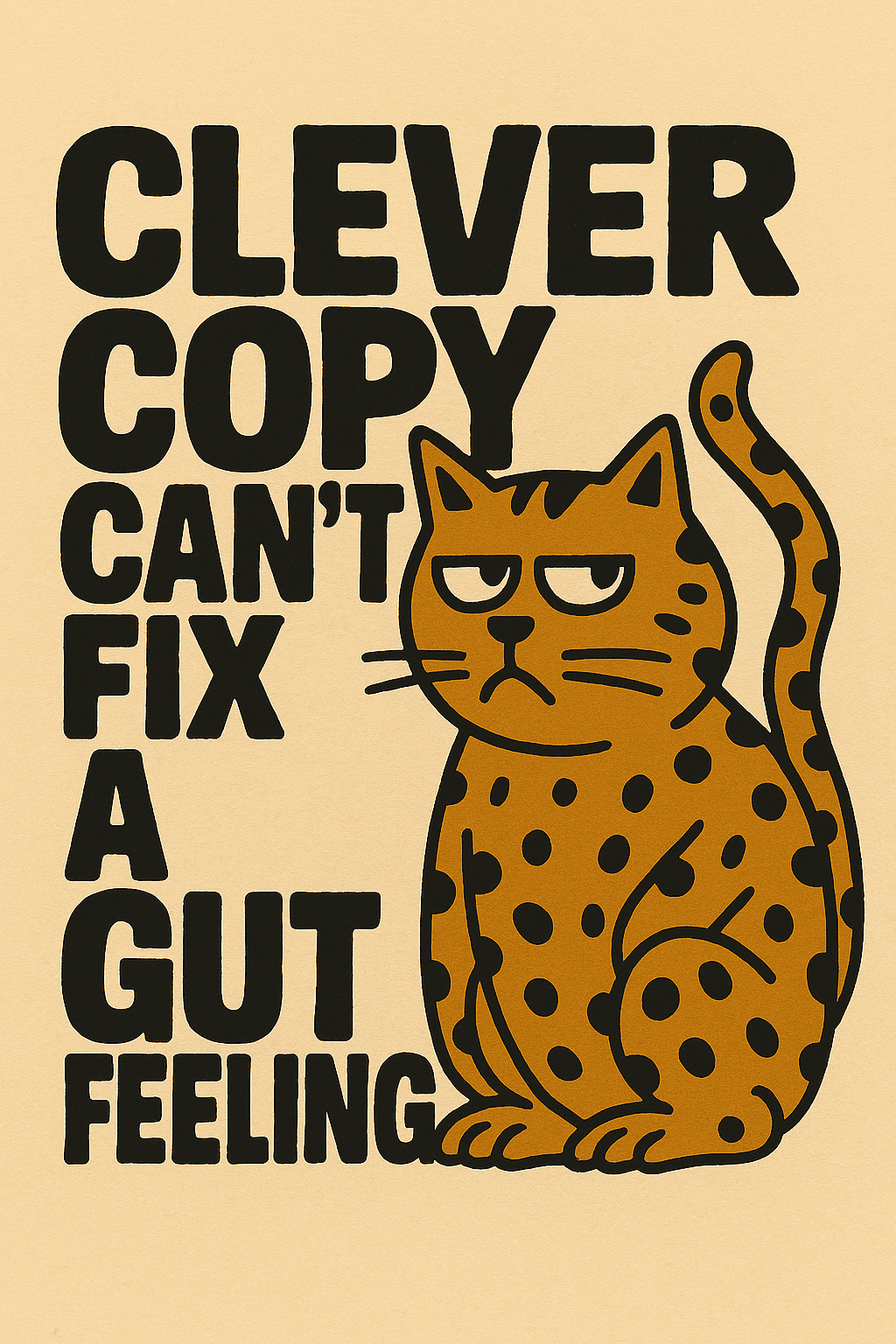
We help businesses look and sound like the trustworthy professionals they already are. Because clever copy can’t fix a gut feeling—but honest design can.