A physical therapy website has one job: turn someone in pain into a booked evaluation. Patients arrive with three questions. Can you help with my problem? Do you take my insurance? How fast can I get in? The best clinic websites answer all three before the visitor scrolls.
We looked at the homepages of well-known physical therapy practices in November 2026 and picked six that do this especially well, from a single-location clinic to national chains. Here is what each one gets right, and what a local clinic can borrow.
1. PT Solutions
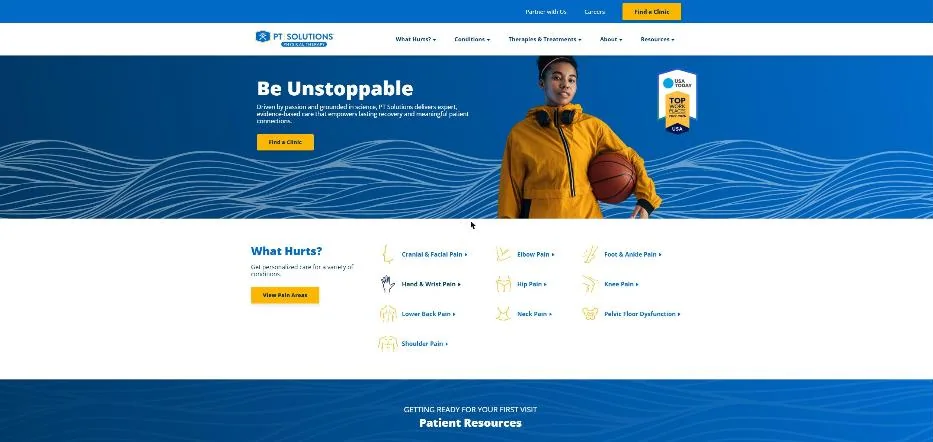
Multi-location practice, Southeast United States.
The homepage opens with a confident headline and one bright yellow “Find a Clinic” button, repeated in the top bar so it is always in reach. Right below the hero, a “What Hurts?” section lists body areas with simple line icons: knee, lower back, neck, shoulder, hip, pelvic floor and more. Each one leads to a page about that kind of pain.
Worth copying: let patients start from their problem, not your list of services. Most people do not know what “manual therapy” is, but they know their knee hurts.
2. Advantage Physical Therapy
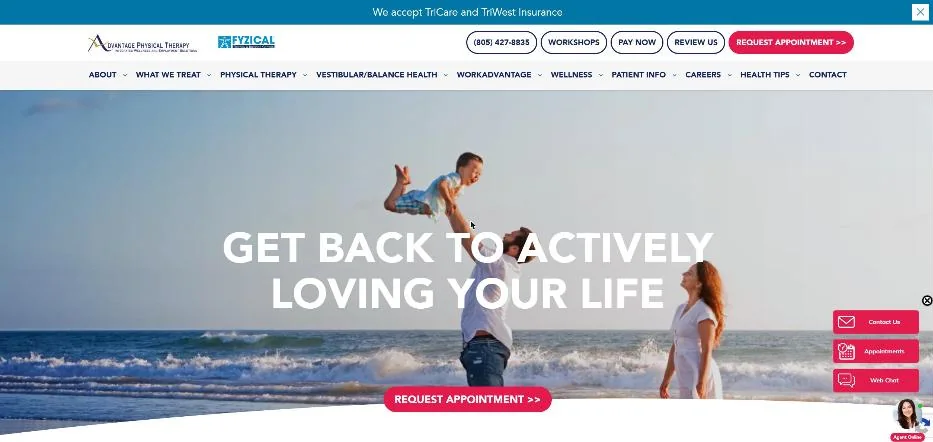
Single practice in Ventura, California.
A thin bar across the top says which insurance plans the clinic accepts, before anything else loads. The header holds the phone number, a red “Request Appointment” button, and smaller buttons to pay a bill or leave a review. The main heading names the town: physical therapy in Ventura, CA.
Worth copying: put the insurance answer and the town name where nobody can miss them. A visitor who is not sure you take their plan usually leaves to call someone who says so.
3. Limitless Physical Therapy
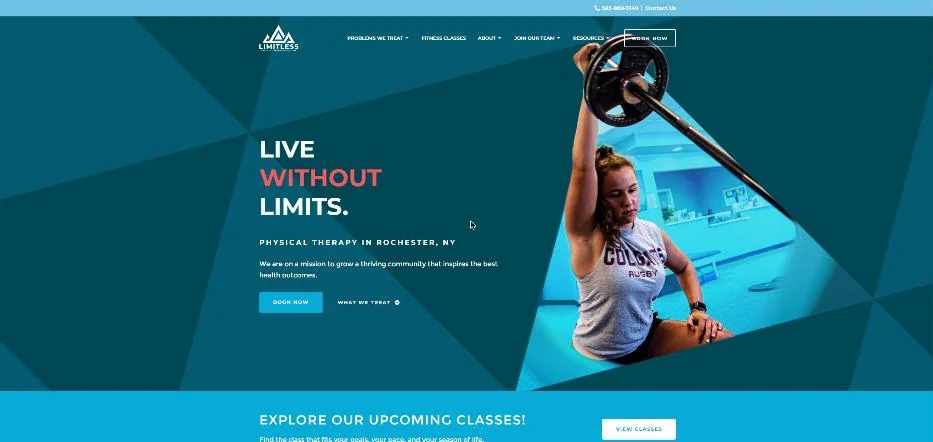
Clinic in Rochester, New York.
Bold diagonal shapes, a deep teal palette and an action photo make this one of the most distinctive clinic sites we found. “Physical therapy in Rochester, NY” sits right under the headline, with a “Book Now” button in the header and the hero. The “Problems We Treat” menu is organized by who the patient is: competitive, endurance, fitness and recreational athletes, performing artists, older adults and post-surgical patients.
Worth copying: organize by the kind of patient you serve best. A runner looking for help should see themselves in your menu.
4. EDGE Physical Therapy
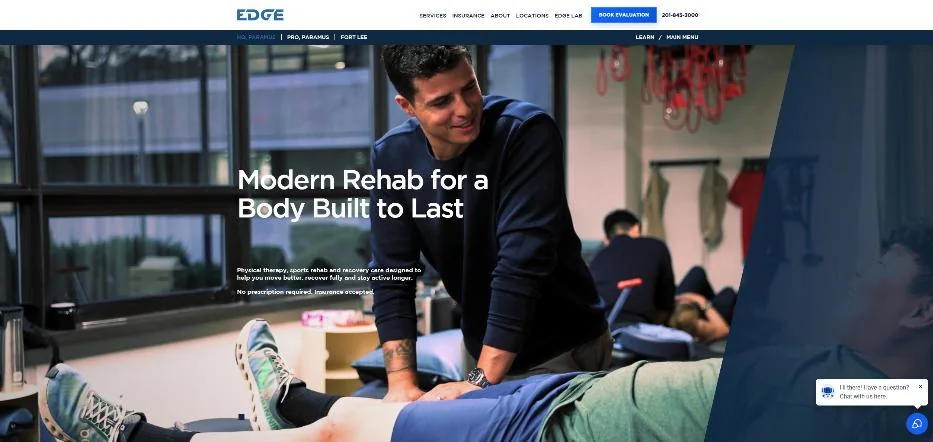
Clinics in Paramus and Fort Lee, New Jersey.
The hero shows a real therapist working with a patient, and one short line under the headline does a lot of work: no prescription required, insurance accepted. A bar under the header switches between the three locations, and a blue “Book Evaluation” button sits next to the phone number.
Worth copying: name the two biggest reasons people hesitate and answer them in a single sentence near the top.
5. ATI Physical Therapy

National provider with clinics in many states.
ATI offers in-clinic, online and hybrid physical therapy, and says so in the first paragraph. Further down, a section called “Find Relief Without a Referral” explains that many insurance plans do not require a doctor’s referral, with honest fine print that payer rules still apply. “Find a Clinic” and “Pay My Bill” stay in the header.
Worth copying: explain direct access in plain words, with the caveat. Many patients still think they need a doctor’s note first.
6. Athletico Physical Therapy
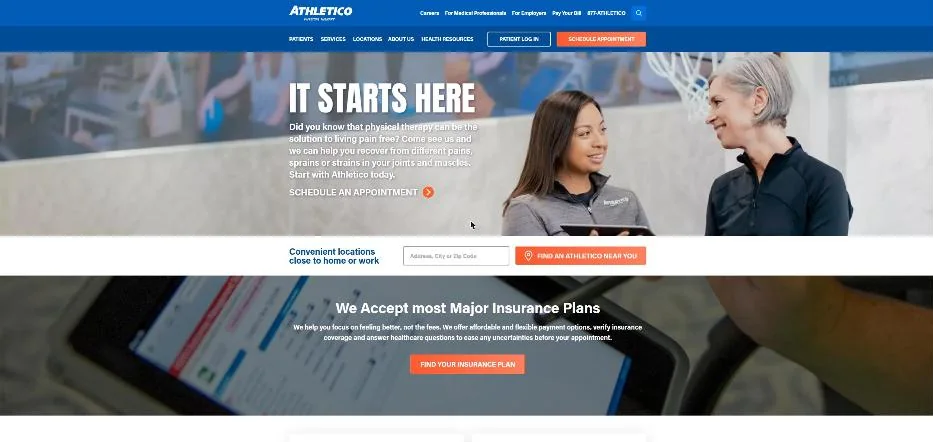
National provider based in the Midwest.
Directly under the hero, a search box finds the nearest clinic by address, city or ZIP code. The next section says the company accepts most major insurance plans and links to a lookup for your plan. The header keeps “Schedule Appointment” and a patient login in view, and the Patients menu includes a free assessment and a page explaining that no prescription is needed.
Worth copying: even with one location, give insurance its own page and link to it from the homepage. It is one of the most visited pages on any clinic website.
What the Best PT Websites Have in Common
- One clear booking action. “Request Appointment”, “Book Evaluation” or “Find a Clinic”, in the header and the first screen, on every page.
- The insurance answer up front. A short line on the homepage and a full insurance page.
- Direct access explained. In Washington and Oregon, patients can generally see a physical therapist without a referral, though some insurance plans still require one. Many people do not know that.
- Pages by condition. Back pain, knee pain, shoulder pain, sports injuries, post-surgery rehab, vestibular and pelvic health, each with its own page. These are the searches patients make.
- Real people. Photos of your own therapists and clinic, and short bios with credentials. Stock photos of smiling models build less trust than your actual team.
- A phone number that taps to call. Many patients still want to ask a question before they book.
- Location details that match Google. Address, hours, parking and a map on the website, matching your Google Business Profile exactly.
- Patient forms online. New patient paperwork, what to wear and what to expect at the first visit.
Advice for a Single-Location Clinic
You do not need a national chain’s budget to borrow these ideas. A focused site with a homepage, an insurance page, a page for each main condition you treat, a team page and a simple appointment request form will out-perform most clinic websites in a small city. Add your town to your page titles and headings, keep your Google Business Profile complete, and ask every happy patient for a Google review.
Our 2027 website checklist covers the basics in about 30 minutes, and our free website score checks your homepage in seconds.
Screenshots of each clinic’s homepage were taken in November 2026 and are shown for commentary. Graticle is not affiliated with these practices, and their websites may have changed since.
Questions People Ask
What should a physical therapy website include?
A clear booking or appointment request button, the insurance plans you accept, pages for the conditions you treat, real photos and bios of your therapists, your location, hours and a map, new patient forms, and a phone number that taps to call.
How can a physical therapy clinic get more patients from its website?
Answer the three questions patients arrive with, which are whether you treat their problem, whether you take their insurance and how fast they can get in, near the top of the homepage. Then build a page for each main condition and keep your Google Business Profile complete with steady reviews.
Do patients need a referral to see a physical therapist?
In Washington and Oregon, patients can generally see a physical therapist without a referral, though some insurance plans still require one. Explaining this on your website removes a common reason people wait.
Is SEO important for physical therapy websites?
Yes. Patients search for things like knee pain physical therapy plus their town. A page for each condition you treat, your town in titles and headings, and a complete Google Business Profile help you show up for those searches.