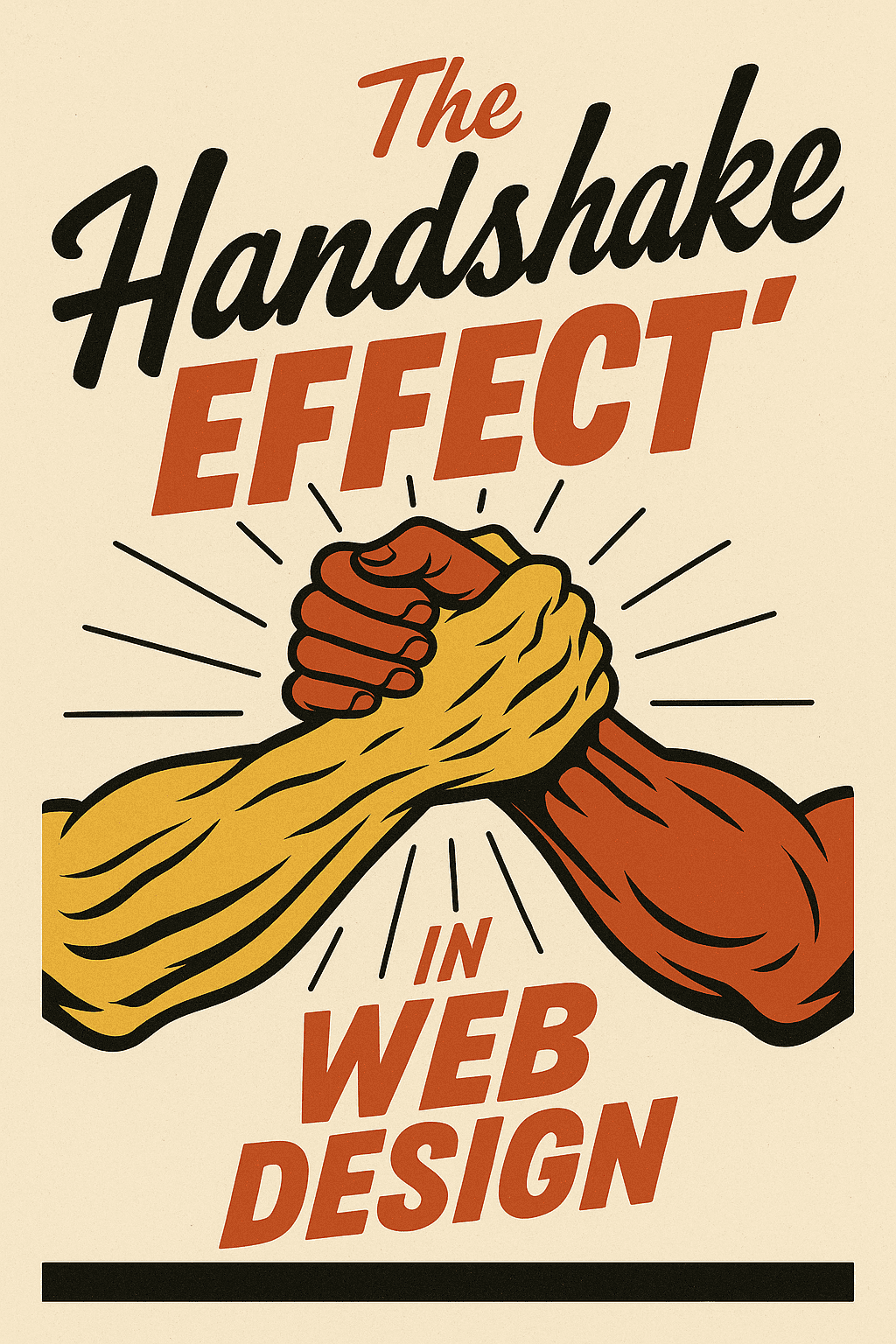
When someone meets you for the first time, the handshake sets the tone. It communicates confidence, warmth, and professionalism before a single word is spoken. Your website works the same way. Whether you run a local service company in Longview or a regional manufacturer serving the Pacific Northwest, most people meet your business online before they ever talk to you. That moment—those first few seconds on your site—shape their expectations about everything that follows.
This is what we call the Handshake Effect. It’s the digital version of a firm, steady, trustworthy introduction. It signals that visitors can trust your business, your process, and the quality of your work. When a website delivers a strong handshake, people stick around. When it fails, they back away just as quickly as they would from an awkward or limp handshake in person.
The good news? The Handshake Effect isn’t mysterious. It’s built on practical design principles anyone can understand. And once you know what to look for, you can spot within seconds whether your site is welcoming visitors or pushing them out the door.
Why the Handshake Effect Matters More Than Ever
People don’t browse the web the way they did ten years ago. They make decisions much faster, skim information more aggressively, and carry higher expectations for clarity and ease. With AI-assisted results guiding more search behavior in 2025, users often visit your website only after they’ve already scanned summaries from Google or their AI assistant. By the time they reach your homepage, they’re already half-decided.
If the experience feels disorganized, outdated, or unclear, you instantly lose that momentum. But if your website greets them with a sense of calm, confidence, and professionalism, that edge becomes yours. This is especially important for small and mid-sized businesses that rely heavily on trust and repeat customers.
Think of your website as the first representative of your business that customers meet. How it “shakes hands” speaks volumes.
What a Good Handshake Looks Like Online
1) Instant Clarity
Before anything else, visitors want to know what you do. Not after scrolling, not after reading a paragraph—immediately. A strong headline, a short description, and a clear visual cue (like a project photo or product image) help visitors feel oriented.
The Handshake Effect starts with that instant recognition. A confused visitor is never a confident visitor.
2) Visual Stability and Clean Layout
Your site shouldn’t feel chaotic. When elements jump around while loading, the design feels careless. When spacing is inconsistent, the impression is sloppy. When colors clash or fonts don’t match, it sends the same message as someone walking into a meeting wearing two different shoes.
A confident handshake online comes from:
- balanced spacing
- consistent colors and typography
- smooth loading without layout shifts
- quality photography instead of stock clutter
- simple animations that support—not distract from—the message
A website doesn’t need to be flashy. It just needs to feel intentional.
3) Helpful, Human Copywriting
Words matter as much as visuals. Visitors respond best to language that feels grounded and real. Plain language always beats jargon. A friendly tone beats stiff corporate phrasing. And straightforward explanations beat buzzwords every time.
Think of how you’d greet someone walking into your office or shop. That same tone should carry through your homepage, service pages, and even your contact form.
4) Smart Navigation
When people land on your website, they’re looking for reassurance that they’ll be able to find what they need. If your menu items are confusing, too long, or buried in dropdowns, the Handshake Effect breaks down quickly.
Navigation should answer three simple questions:
- Where am I?
- Where can I go?
- How do I contact you?
When these answers are obvious, visitors feel guided—like someone is walking with them instead of leaving them to figure things out alone.
5) Real Evidence of Competence
People trust what they can see. A single authentic photo or real project example is worth more than a dozen generic stock images. Testimonials that sound like actual customers—short, specific, and conversational—go far. So do clear before-and-after galleries, snapshots of your process, and pictures of your team doing actual work.
When your website shows proof instead of just claiming it, the handshake feels earned, not forced.
The Subtle Cues That Build Trust Without Saying a Word
A strong handshake in person depends on body language. Online, it depends on design language. Visitors pick up on these small cues without even realizing it:
- Whitespace: Healthy spacing keeps things calm and readable.
- Consistent buttons: One primary color, one style—it shows discipline.
- Readable text: Comfortable font sizes across both desktop and mobile.
- Predictable interactions: Hover states, transitions, and animations that feel smooth and natural.
- Fast loading: Slow pages feel like a weak handshake.
These micro-impressions stack up quickly. And the more consistent they are, the more they feel like confidence.
Why the Handshake Effect Hits Harder for Local and Regional Businesses
Big national brands can get away with clunky websites because people already know them. Local businesses can’t. When you rely on referrals, word of mouth, and community reputation—whether you’re a contractor in Longview, a shop in Kelso, or a manufacturer in Vancouver, WA—your website becomes a reflection of how you do business.
If your online presence feels reliable and thoughtful, customers assume your work will be too. If it feels rushed or neglected, they assume the same.
In small-town and regional markets, trust builds business. The Handshake Effect helps you earn that trust instantly.
Strengthening Your Own Handshake Effect
1) Lead With a Solid, Plain-English Message
A good homepage headline should tell visitors exactly what you offer, in about five to eight words. Nothing fancy—just clarity.
2) Show Real Projects and People
Skip polished stock photos. Use real photos of your team, your work, your shop, your process—anything that shows your business as it actually is.
3) Keep the Layout Clean
Remove unnecessary boxes, banners, or overlapping design elements. Give your content room to breathe.
4) Make Contact an Easy, Natural Next Step
Your phone number, quote button, or contact link shouldn’t be something users have to hunt for. When someone’s ready, the next step should be right there.
5) Fine-Tune the Mobile Experience
Most users are on their phones. If your mobile layout feels cramped or chaotic, the handshake falls apart. Buttons should be easy to tap, text should be readable, and forms should be painless.
How the Handshake Effect Boosts SEO
Search engines pay close attention to how users behave on your site. A strong Handshake Effect encourages:
- longer on-page time
- lower bounce rates
- more page views per visit
- more conversions
When your site sends these signals consistently, your rankings improve. AI-assisted search also rewards businesses whose websites feel credible and user-friendly, especially on the first impression.
The takeaway: a strong handshake doesn’t just feel good, it helps you get found.
Your Website Is a First Impression You Control
You can’t control when someone visits your website. But you can control the experience they have the moment they arrive. A confident, warm, well-designed website sets expectations, builds credibility, and makes visitors feel like they’re dealing with people who take pride in their work.
That’s the Handshake Effect. And when it’s done well, it opens the door to conversations, quotes, and long-term customers.
If you ever want help building a website that gives your visitors that confident first handshake, Graticle Design is always here to help craft something that feels true to your business—and makes people feel good the moment they arrive.