1. A Quiet Inbox
On a gray Tuesday morning in March, Henry Weaver sat at his desk staring at the blinking cursor of his email inbox.
Zero new messages.
He refreshed, again. Nothing.
He leaned back, rubbed his temples, and looked out the window of his small design studio in Longview. The rain had started its usual slow descent — the kind that made time feel heavier.
Henry’s business, Weaver & Co. Home Renovation, had been running steady for years. Word-of-mouth carried him through slow seasons, and his website was supposed to help fill the gaps. But lately… silence.
The traffic reports still showed visitors coming and going, yet nobody was reaching out. His “Contact Us” form sat there like an unused doorbell on an empty house.
2. The Strange Visitor
Later that afternoon, Henry’s assistant, Mia, knocked softly on the door.
“There’s someone here to see you,” she said.
A tall woman in a raincoat stepped in. She carried a laptop under one arm and a paper coffee cup in the other.
“Henry Weaver?”
He nodded cautiously.
“I’m Clara,” she said, smiling. “I help small businesses figure out why their websites are too quiet.”
Henry chuckled. “You’re a little late — the silence started months ago.”
“Good,” she said, setting down her cup. “That means the ghosts have had time to settle.”
3. The Ghosts of the Contact Page
Clara opened his website on her laptop.
“Let’s go see where they disappear,” she said.
They scrolled past the homepage — nice photos, clean layout, friendly copy. Then to the Contact page.
“Here,” she said. “This is where they freeze.”
The page was simple enough — a big form, gray background, a polite headline:
“Contact Weaver & Co. for a Quote.”
Below it, twelve boxes asked for everything from phone number to “Describe your renovation goals.”
Clara squinted. “Ah. The wall of interrogation.”
“It’s not that bad,” Henry protested.
She smiled. “Imagine you’re walking into a hardware store and the clerk immediately asks for your name, address, budget, square footage, and a photo of your home before saying hello. Would you stay?”
Henry rubbed his chin. “Fair point.”
Clara clicked through a few heatmap recordings. “They get here. They move their mouse around. Then they stop. You can almost feel them hesitate.”
“Why?”
“Because it doesn’t feel like a conversation,” she said. “It feels like homework.”
4. The Story Behind the Silence
Clara told him a story.
Once, I worked with a bakery in Portland. Their website had a similar issue — visitors, no messages.
We replaced their contact form with a simple note:
‘Tell us about your event — we’ll write back within a day.’
We added a photo of the owner smiling behind the counter.
Next morning, they woke up to five new orders.
Henry raised an eyebrow. “Just like that?”
“People don’t trust forms,” she said. “They trust faces, promises, and clarity. Every field you add is a reason to stop typing.”
5. The Memory
Henry leaned back and stared at the wall. He remembered when he first built the site years ago. He’d copied a template from another contractor. It looked professional enough.
But now, under Clara’s gentle scrutiny, it felt sterile. Lifeless.
He thought of the customers he wanted — families renovating kitchens, people restoring old homes. They weren’t filling out cold forms; they were looking for someone they could talk to.
“Alright,” he said. “What would you do differently?”
Clara grinned. “Let’s write a new story together.”
6. The Rewrite
They began with the headline.
Instead of “Contact Weaver & Co. for a Quote,” Clara typed:
“Let’s talk about your next project.”
Then she added a subline:
“Send a quick message below — Henry or Mia will get back to you within one business day.”
“That’s better,” he said, “but does it sound too casual?”
“Casual feels human,” she said. “Professionalism doesn’t mean cold.”
They cut the twelve fields down to three: Name, Email, Message.
Then she replaced the gray background with a warm photo of Henry and Mia standing in front of one of their finished projects — smiling, hammers in hand.
Underneath the form, she placed a small testimonial:
“Henry treated our home like his own. We couldn’t be happier.” — Dana L., Longview
When they previewed it, the difference was night and day.
It didn’t feel like a form anymore. It felt like an invitation.
7. The Waiting Game
For the next few days, Henry checked his inbox nervously every morning. Still nothing.
He started doubting. “Maybe it’s not the page,” he muttered. “Maybe people just aren’t spending.”
Mia shrugged. “Give it time.”
By the third morning, he nearly gave up. Then — ding.
A message.
Then another.
By Friday, there were six. Small projects, a few inquiries, but more than he’d had in months.
Each one had the same line near the bottom:
“Loved how easy your contact page was — figured I’d just reach out.”
He smiled. “I guess the ghosts have moved on.”
8. The Conversation That Changed Everything
The following week, Clara stopped by again.
“I see the inbox is alive,” she said.
Henry nodded. “It’s wild. Nothing else changed. Just that page.”
“That’s how design works when it’s honest,” she said. “It’s not about decoration. It’s about empathy.”
He looked thoughtful. “You really think people feel that?”
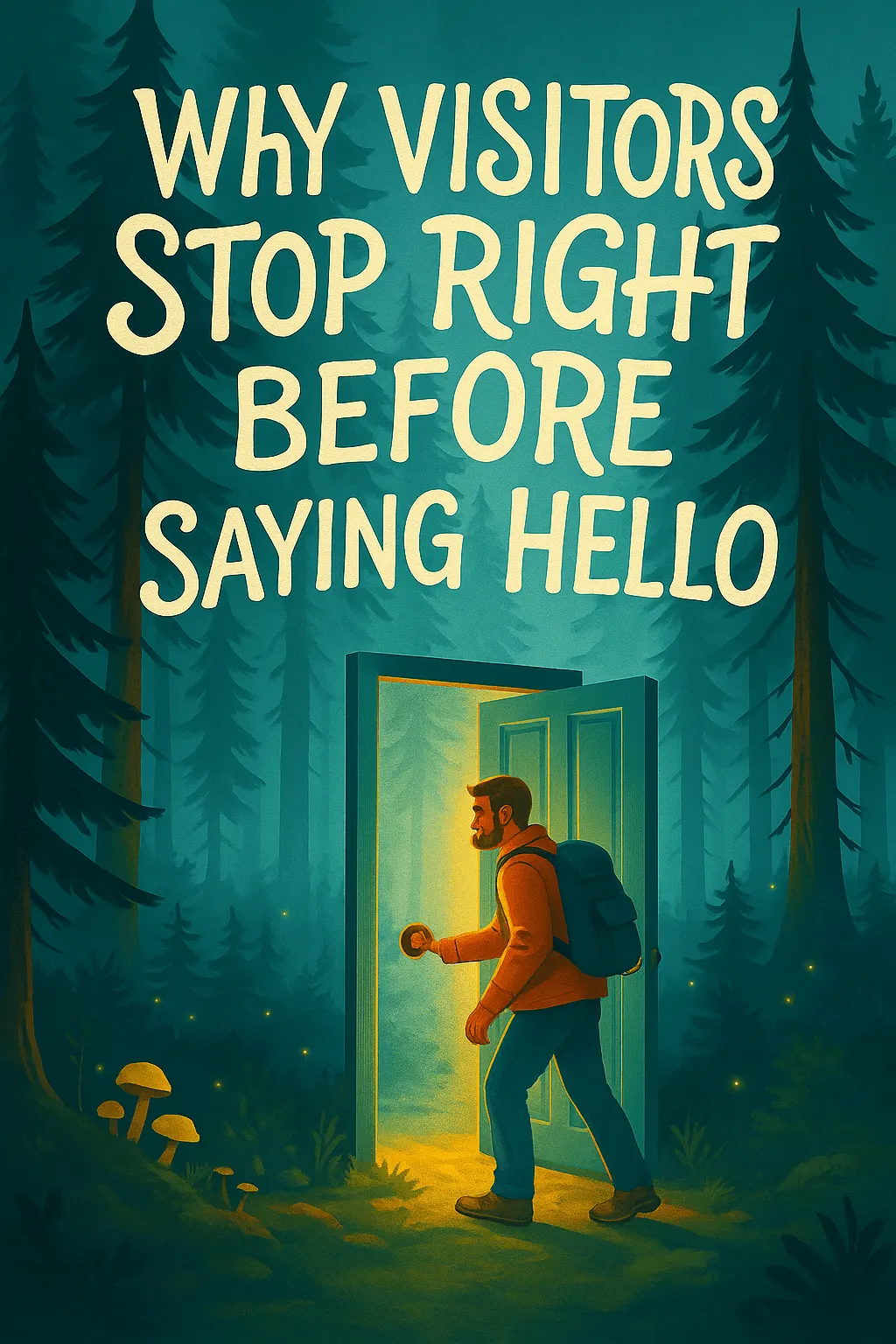
“They do,” she said. “A website is just a room you’ve built online. If it’s too cold, people won’t stay. If it’s cluttered, they get overwhelmed. The contact page is the doorway — it’s where they decide whether to knock.”
Henry chuckled. “And mine had a sign that said ‘Please fill out this survey before knocking.’”
“Exactly.”
9. The Lesson Beneath the Story
Weeks went by, and Henry couldn’t stop thinking about how small changes made such a difference.
He began seeing patterns everywhere — in the way customers hesitated before asking questions, or how contractors he knew avoided follow-up calls because they didn’t know what to say.
Clara’s lesson echoed: Design isn’t decoration. It’s psychology in pixels.
He wrote the phrase on a sticky note above his monitor.
10. Rebuilding With Empathy
By summer, Henry decided to rebuild the entire site from the ground up, this time thinking about how people felt at every step.
The homepage featured his crew smiling mid-project, not stock photos. The About page told the real story of how he’d started with a single hammer and a borrowed truck.
And the contact page? It stayed exactly as Clara designed it — short, friendly, human.
Every few days, a new message arrived. Some small. Some big. But each one began with warmth:
“Hi Henry,” or
“Hey, I saw your site — feels like you’re the kind of person I can talk to.”
He’d smile each time. The silence was long gone.
11. The Late-Night Email
One night in July, Henry received an email from a woman named Lauren.
“I was looking for someone to help restore my grandparents’ old farmhouse,” she wrote.
“Everyone else felt too corporate. Your site made me feel like you’d actually listen.”
That one sentence stopped him cold.
Not because of the job — but because it proved Clara’s point in the simplest way possible.
People don’t fill out forms.
They start conversations.
12. The Return of Clara
Months later, Clara returned for coffee.
The business had grown. The phone rang regularly now, and Henry had hired two more crew members.
She smiled at the bustle. “Looks like you’re busy.”
“Busier than ever,” he said. “Funny how it all started with a little form.”
“It wasn’t the form,” she said, sipping her coffee. “It was what it said about you.”
He frowned. “What do you mean?”
“You stopped hiding behind a wall of questions,” she said. “You invited people in. The form was just the handshake.”
13. What the Reader Learns (Without Knowing)
The story of Henry and Clara is fictional, but the lessons are real.
Your own contact page might be the quietest part of your site — not because people don’t want to reach out, but because something about it makes them hesitate.
Maybe it’s too formal.
Maybe it asks too much too soon.
Maybe it doesn’t sound like you.
Here’s what Clara would tell you, if she were standing over your shoulder:
- People freeze when they feel uncertain. Tell them what happens next after they click.
- Less is more. Cut the clutter and ask only for what you need.
- Show your face. A real person earns real trust.
- Speak like you talk. Replace “Submit Inquiry” with “Send Message.”
- Remind them you’ll respond. “We reply within one business day” is simple but powerful.
Because every website visitor is just a person deciding if they can trust you enough to start a conversation.
And every contact page is your chance to say, “You can.”
14. The Epilogue: One Last Knock
On a misty fall morning, Henry arrived early to the office.
He poured his coffee and sat down, the soft glow of the monitor lighting his face.
Another message had arrived overnight:
“Hey Henry, saw your work online. Would love to talk about a kitchen remodel.”
He smiled and typed back immediately:
“Good morning! Thanks for reaching out — I’d be glad to help. Want to chat this afternoon?”
Somewhere out there, another person had crossed that invisible line from hesitation to action — and all it took was one friendly doorway.
Final Takeaway for Readers
Most websites shout, “Look at us!”
But the ones that work whisper, “Talk to us.”
If you want to stop losing visitors at the finish line, treat your contact page not as a form — but as a conversation starter.
Just like Henry learned, people don’t freeze when they feel welcome.
They only freeze when your site forgets there’s a human on the other side.