For a lot of contractors, finding good people is harder than finding work. Most trades already post openings on job sites and Facebook. But a good worker who hears about you will usually look at your website before applying, and if there is nothing there about working for you, many move on.
A careers page on your own website gives every job post, sign on your truck and word-of-mouth referral one place to send people. Here is what to put on it.
What to Include
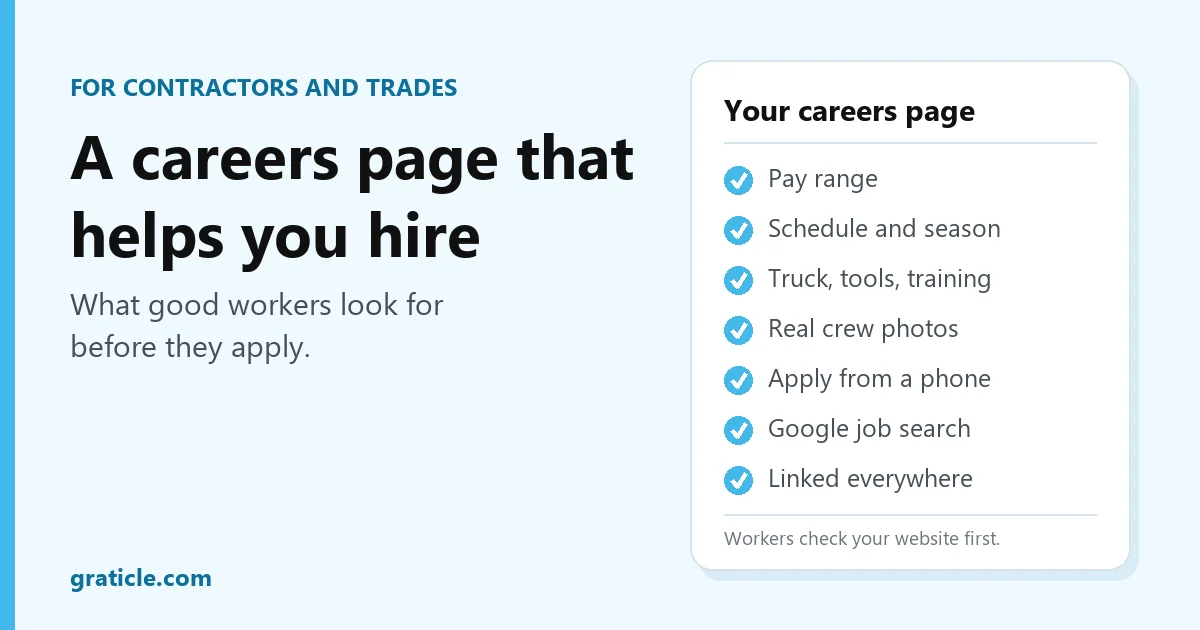
- Pay. A pay range is the first thing people look for. In Washington, employers with 15 or more employees must include the wage or salary range and a general description of benefits in job postings. Check the current rules with the Department of Labor & Industries.
- Schedule and season. Start time, days, overtime and what happens in the slow months.
- What the work is really like. The kinds of jobs, the towns you work in and how far people drive.
- What you provide. Truck, tools, phone, gear, training or help with an apprenticeship.
- Who it is for. Experienced, entry level or both. Say which licenses or certificates you need, and which you will help someone get.
- Real photos. Your crew on a job and your trucks. Ask before you post anyone’s face. A real photo says more about a workplace than any stock image.
- A few words from your team. If someone on the crew is willing, a line or two about why they stay.
Make Applying Easy
Most people will apply from a phone, often on a lunch break. A long form with a resume upload loses them.
- Ask for name, phone, the job and a couple of questions about experience. That is enough to call someone back.
- Make the resume optional.
- Offer a phone number or text option for people who would rather talk.
- Reply quickly. Good workers are usually talking to more than one company.
Show Up in Google’s Job Search
Google can show job openings right in search results when the page has job posting structured data, a short block of code that spells out the title, pay, location and dates. Each opening should have its own page, and the listing should come down or be marked as closed once the job is filled. Google’s own guidelines explain what is required.
Where to Link It
- A “Careers” or “Now hiring” link in your website menu or footer.
- Your Google Business Profile, with a post when you are hiring.
- Your Facebook page and any job site posts, pointing back to the careers page.
- Your truck lettering, yard signs and invoices: “Now hiring, see our website.”
A careers page also helps with customers. A company that is hiring and shows its crew looks busy and established. Our contractor websites can include one, and our free website page planner lists the pages a trade website usually needs.
Questions People Ask
Should a small contractor have a careers page?
Yes, if you hire even once or twice a year. Good workers check a company's website before they apply, and a careers page gives every job post and referral one place to send them.
What should a contractor careers page include?
The pay range, schedule, the kind of work and towns, what you provide such as a truck and tools, training, real photos of your crew and a short application that works on a phone.
Do I have to list pay in a Washington job posting?
Washington requires employers with 15 or more employees to include the wage or salary range and a general description of benefits in job postings. Check the current rules with the Department of Labor & Industries.
How do job openings show up in Google search?
Google can show openings in its job search when each opening has its own page with job posting structured data. The listing should be removed or marked closed once the job is filled.